

Apr 11, 2016



Have you ever heard of ICONIC? It's a sensational congress of Concept art and animation, made online and designed by Henrique Lira. The guests and interviewees are distinguished artists who tell a little about their work and process, the industry, the difficulties of starting their careers, how to overcome themselves and create a study routine... and several other subjects! These are very valuable tips and I highly recommend that everyone who wants to follow the illustration journey, Concept art or animation watch the lectures.

In one of the lectures that I had the opportunity to attend, an artist said that we are like athletes: we must always exercise, otherwise we “rust”. Truth. This also reminds me of another problem, in fact: when we assume that we already know what is necessary and we don't need to train anymore. Yes, absurd! We must always train, even when we have mastered techniques, because, as stated above, if we stop, we rust. This is true for any artist, both at the beginning of their career and the professional who has been in the business for years.
Drawing frequently releases creativity, takes the raw ideas out of your head and transforms them into something concrete. Every week we need to establish a routine according to the time we have to train and what we want to improve. Speaking of which, the artists gave great tips for those who really want to train hard. I'm going to share here with you the ones I found most important. If you can't watch it, enjoy! ;)
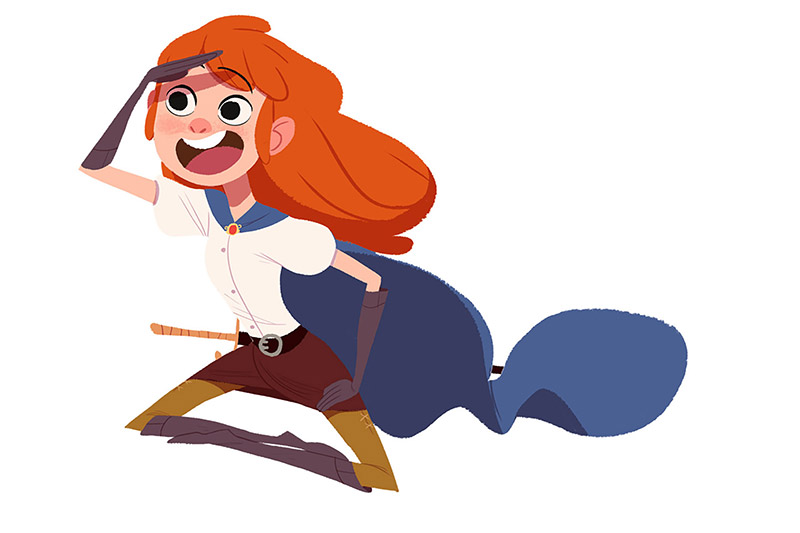
There are several interesting sites for gestural drawing training. Those who commented the most were the Www.quickposes.com Or the reference.sketchdaily.net. They have a Timer that you can choose the time at which you want new images to appear and then you draw each photo that appears at the specified time. The idea is to understand the forms as a whole and to worry as little as possible about the details. This will help you memorize the shapes and help you structure the initial drawing. It primarily serves to develop your visual perception.
Still in the idea of Timer, or Bruno Biazotto Did you comment on using a Timer to account for the time spent studying and another for the time wasted. It's incredible how much time we waste on trivial things, which is why it's important to create a routine!
That's one of the points that I'm sure many of us already make, isn't it? It remains a very important point. The good thing, too, is to train thoroughly everything you still have doubts (e.g. hands, feet, movement, etc.).
Do a lot of sketches. Always! Use your imagination. The sketch also serves to test everything you've learned and will learn along the way.
Another point that is essential for those who want to work in the area is to study narrative. Illustrators, Concept artists, animators, etc. need to be good storytellers. Our mission is to tell stories through images. We do this based on movements, exaggerations at a specific point in the illustration (e.g. as a character with a big head to focus on the head, or when the shapes in the drawing - hands, body position, etc. - point to an object that you want to focus on, etc.). All to incite the curiosity of those who observe our work. What is your character like? Where does he live? What's his story? And so on. This is fundamental.
I loved the lecture by Modeler and Texture artist Letícia Reinaldo. She addressed a very interesting topic: how to transmit emotions through the intelligent use of light and color. Both are also very important for instigating curiosity, as well as narrative, as described above. Through lighting and color, you can make the focus even more visible and cause an even greater aesthetic sensitivity. For example, a scene where light reflects intensely on the character's expression, making the scene dramatic. Generally cold colors (such as blue) also help reinforce the idea of the dramatic and sad, but it all depends on how you make your composition.
There's no way. If you're working on a character, a setting, an object, don't get attached. Eventually you'll need to make a change here and there until it's perfect.
Analyzing everything around us matters a lot. I even see this in my work. I tend to capture a lot of what I see and sometimes even unconsciously apply it to my illustrations. The forms transmit sensations to us and we have to pass this on to those who see our work as well.
Always put your ideas down on paper and leave them well defined before making one - or several! — final versions. Having clear and well-crafted ideas is a differential. Have people who see your work walk with their eyes to the focus point that you define in your illustrations. Create contrasts for what is important in your compositions!
True, really. I've seen many works where the painting wasn't even so well done, but the idea itself was so well elaborated that the painting style didn't even count. That's why it's so important to have a clear idea of what you want to do. Everything is easier when the idea is clear.
A lot! Everything you see and read contributes to your visual and technical repertoire. Just don't abuse it so it doesn't become procrastination, hahaha.
Anyway, that's it. I tried to summarize as much as possible everything most important that I was able to capture in the lectures I attended at the event. I hope it helps you just like it helped me too:)
Don't forget to sign up for the newsletter of ICONIC so as not to miss any more news! The lectures are free during the event, but if you want to review a lecture or check out extra content, such as classes with these masters, you will need to purchase a plan Premium or Premium Plus, okay?
In fact, they provided a eBook for free download, The Internal Journey. You can download it here: http://iconic.network/a-jornada-interna/
A good week to you!